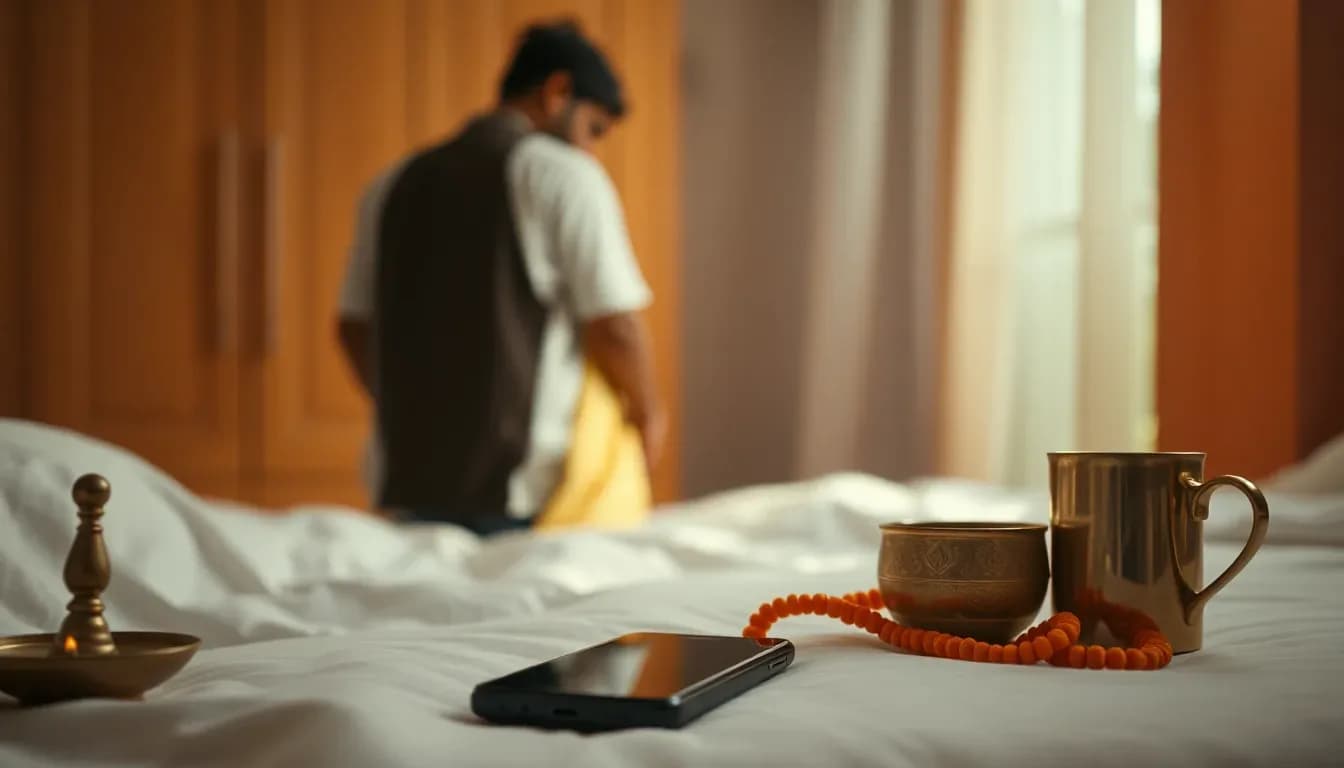
More Indian women are choosing AI companion apps in 2026, and the reasons are more practical than romantic. The users driving this shift are not isolated or socially withdrawn. Many have full calendars, close friendships, and functional relationships. They are turning to AI companions because those apps offer something specific that human social circles often do not: a genuinely private space to say things without consequence.

What Indian social dynamics actually look like for women
The support structures that are supposed to help Indian women process intimate questions, which are family, friends, and partners, are often exactly the parties the woman does not want to involve. The mother is too invested. The best friend talks. The partner takes it personally. The therapist requires a two-week wait and a booking she does not know how to explain to the household.
The question does not go away. It just stays unspoken.
This is the gap that AI companion apps have quietly walked into. The queries Indian women are actually typing at midnight include things like "is it normal to feel disconnected from my husband after the baby," "why has my sex drive dropped so much," and "how do I tell my partner I am not happy without starting a fight." These are being processed in chat interfaces late at night after the household is asleep, not because AI is better than a therapist or a trusted friend, but because it is available when no human support is, it has no stakes in the conversation, and it does not tell anyone.
Pro Tip: Think of an AI companion the way you think of a journal that responds. It is not a replacement for the people in your life. It is a private thinking space that happens to talk back, at whatever hour you actually need it.
The privacy calculus is different for women in India
Research from the Internet and Mobile Association of India notes that women in urban India are disproportionately likely to use private or incognito modes when searching for health and wellness information. The reasons are layered. A WhatsApp family group is not a place to process questions about desire, disconnection, or intimacy. Personal information shared in family group chats travels fast and in directions the sender cannot control.
For women in joint family setups, the threshold for sharing anything about the body or relationships is higher still. The family is present, interested, and opinionated. Privacy is something you construct in stolen windows, at dawn or past midnight, when the house is finally quiet.
AI companion apps are private by design. The conversation does not leave the app unless the user shares it. For many women, that structural fact alone is the reason they downloaded the app.
The timing: why this is happening in 2026 specifically
Three things converged. Smartphone penetration crossed 90 percent in urban India by 2025. The pandemic-era habit of having serious conversations through screens normalized text-as-emotional-interface in a way that simply was not true before 2020. And a generation of Indian women who grew up with the internet is now in its late 20s and 30s, navigating marriage, postpartum shifts, and career pressure simultaneously, looking for support structures that do not require them to be emotionally exposed in front of people who will see them at dinner on Sunday.
That is the actual user profile. Not lonely. Not substitute-seeking. Practical.

What these apps actually offer (and what they do not)
It is worth being direct about the boundaries.
What an AI companion does: holds a conversation without judgment, remembers context within a session, responds to emotional content without deflecting, and in the case of Tantrix AI, connects to a paired physical device so that physical intimacy is part of the experience if the user chooses.
What it does not do: provide therapy, diagnose mental health conditions, replace human intimacy, or replicate the warmth of someone who actually knows you and has been through things with you.
The distinction matters because some of the women driving this growth are using the app for exactly what it says on the label: a private companion that responds to how they are feeling and does not need anything back. Others are using it as a rehearsal space, a place to articulate things they want to eventually say to a partner or therapist, but cannot yet say out loud to another person. Both uses are valid. Neither requires overstating what the technology does.
The Tantrix AI angle: when the companion connects to something physical
Tantrix AI is the only platform in India where the AI companion is directly connected to a physical device. The conversation you have in the app influences what the paired Tantrix device does in real time. This is the two-way AI-device sync no other Indian brand offers.
For women who use Tantrix AI, the conversation is not just text. The Tantrix Kalaa, a wearable app-controlled device, and the Tantrix Moh can both be paired to the Tantrix AI companion. What you express in the conversation changes what the device does. The physical and the conversational are not separate experiences.
For women navigating phases of low desire, postpartum disconnection, or the difficulty of reclaiming solo intimacy in a shared household, the ability to integrate conversation and physical sensation in a private, controllable way is substantively different from a remote-controlled device.
Frequently asked questions
Why are more Indian women using AI companions now? The shift is driven by a combination of greater smartphone access, the normalization of screen-based emotional conversation, and a specific gap in Indian social structures: the absence of private, low-stakes spaces to process intimate questions. AI companions fill that gap on demand, at hours when human support is unavailable.
Are AI companion apps safe to use in India? Most reputable apps encrypt conversations and do not share data without consent. Tantrix AI stores data on India-based servers. For a full breakdown of what to check, see Are AI Companion Apps Safe? Privacy, Data, and Boundaries.
Can an AI companion replace therapy for Indian women dealing with relationship stress? No, and reputable apps do not claim otherwise. An AI companion can serve as a private processing space between therapy sessions, but it cannot diagnose, treat, or manage clinical mental health conditions. For professional support, the Tele-MANAS helpline (14416) provides free counselling in multiple Indian languages.
What makes Tantrix AI different from a general AI chatbot? A general AI chatbot is text-only. Tantrix AI connects to a physical device, so the conversation can influence a physical experience in real time. It is also built for intimacy and wellness specifically, not general productivity or information retrieval.
Is there a community for Indian women using AI companions? Tantrix AI is building an in-app community where members can share experiences and connect privately, designed for adults who want to talk about intimacy without doing it on a platform that flags them. It is on the roadmap for late 2026.
Want to explore more?
What Is an AI Companion App? An Honest Explainer for Indian Users →
AI Companion vs Therapist: When to Use Which (Honest Comparison) →
Are AI Companion Apps Safe? Privacy, Data, and Boundaries →
AI Companion Apps and Indian Privacy Law: What to Know in 2026 →