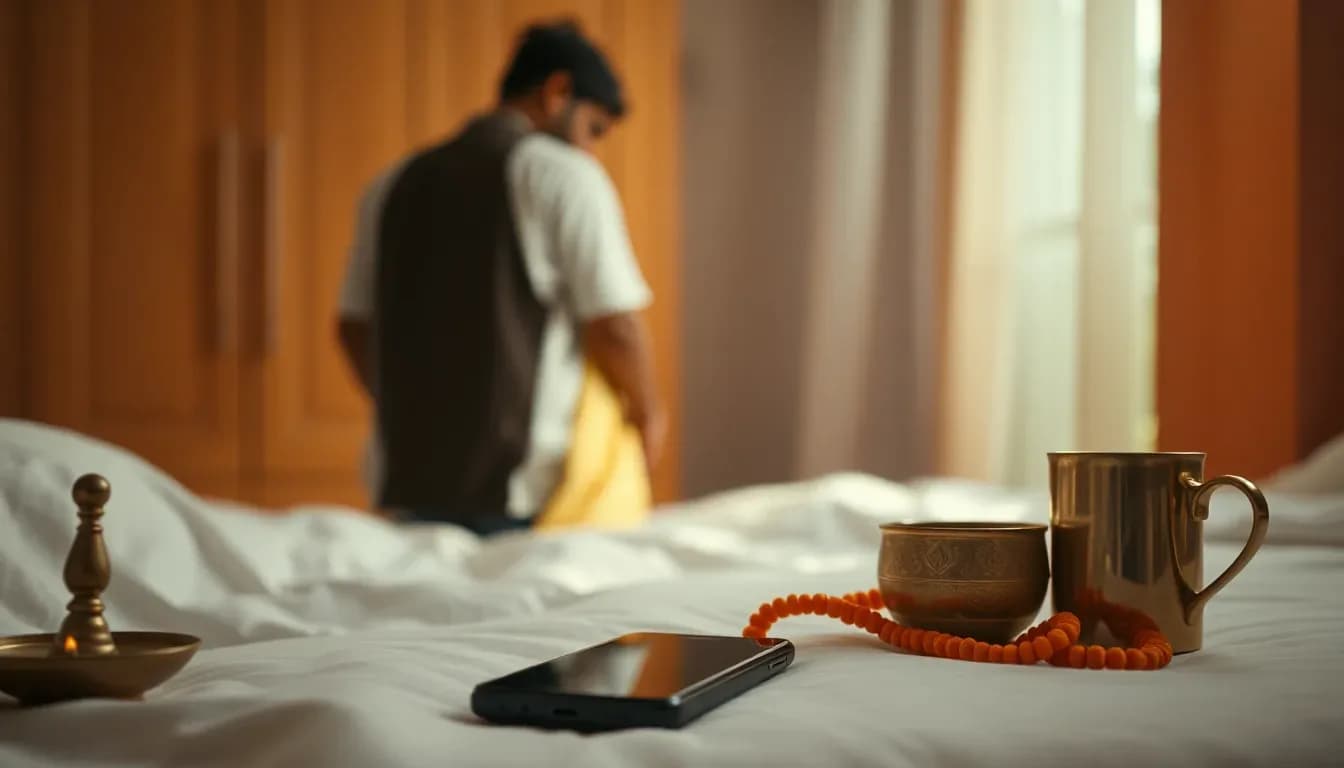
The honest answer to the AI companion vs therapist question is that they are not competitors. A therapist treats; an AI companion accompanies. If you are dealing with a diagnosable condition, persistent low mood, trauma, or thoughts of harming yourself, you need a qualified professional, and no app should claim otherwise. If you are dealing with loneliness, awkwardness around intimacy, or the simple absence of someone to talk to at 11 PM on a Tuesday, an AI companion is built for exactly that. This article maps the boundary honestly, because most writing on this topic is either app marketing or therapist gatekeeping, and Indian readers deserve better than both.

What each one actually is
A therapist is a trained clinician. In India that usually means an RCI-registered clinical psychologist, a psychiatrist with an MD, or a counsellor with a psychology degree. They diagnose, they follow treatment frameworks like CBT, and they carry legal and ethical accountability for your care. Sessions are scheduled, structured, and goal-directed.
An AI companion is software designed for open-ended conversation. It is available at 2 AM, it does not judge, it remembers your context, and it never gets tired of you. Good AI companions are engaging and surprisingly perceptive about mood. But they are not clinicians. They follow patterns in language; they do not carry clinical responsibility, and they cannot prescribe, diagnose, or manage risk the way a human professional can.
The confusion exists because both involve talking about your inner life. The overlap ends there. One is a medical relationship. The other is closer to a daily companion: part diary, part conversation partner, part practice ground.
Where an AI companion genuinely helps
Be specific about what AI companions are good at, because the honest list is longer than sceptics admit.
Loneliness between connections. Most adult loneliness is not clinical depression. It is the flat stretch after a breakup, the first year in a new city, the long-distance phase of a relationship. An AI companion fills conversational silence without the social cost of leaning too hard on friends.
Practice for hard conversations. Many people, especially men raised to never discuss feelings, have simply never rehearsed saying things out loud. Telling an AI "I have been feeling invisible in my marriage" is a low-stakes first draft of telling your spouse. The rehearsal effect is real, and several readers of our guide on how to ask for what you want in bed will recognise the pattern: saying it once, anywhere, makes saying it again easier.
Intimacy topics carrying shame. There are questions Indians rarely ask anyone: about desire, kink, performance, bodies. An AI companion is the one conversation partner guaranteed not to flinch, gossip, or appear at the next family function.
Daily emotional maintenance. A consistent, warm check-in has value on its own. Think of it as the difference between a gym and a hospital: the gym will not cure an illness, but it keeps the baseline healthy.
Pro Tip: Treat an AI companion the way you treat a UPI payment versus a bank visit. Daily, small, frictionless transactions belong on the app. The big, structural stuff still needs the counter. Knowing which transaction you are making is the entire skill.
Where only a therapist will do
This part is non-negotiable, and any AI companion brand that blurs it is not being straight with you.
See a professional if you have persistent low mood or anxiety that interferes with work, sleep, or eating; trauma you have never processed; symptoms like panic attacks, compulsions, or dissociation; substance dependence; or any thought of self-harm. These are clinical territory. An AI can listen, but listening is not treatment, and a delay in real care has real costs.
India's treatment gap makes this worth saying loudly. NIMHANS' National Mental Health Survey found that the large majority of Indians with mental health conditions receive no treatment at all. The temptation to substitute a free app for absent care is understandable and wrong. If cost is the barrier, government facilities, NIMHANS-affiliated services, and telepsychiatry programmes like Tele-MANAS (the national mental health helpline, 14416) exist precisely for this.
A useful rule: if you would describe your situation as "I am struggling to function," book a professional. If you would describe it as "I am fine, but something is missing," an AI companion is a legitimate tool.

The Indian layer: why this question lands differently here
In most Indian households, "I am seeing a therapist" is still a sentence loaded with explanation. Family WhatsApp groups treat therapy as either a luxury or a red flag. Access mirrors the stigma: qualified therapists cluster in metros, charge ₹1,500 to ₹4,000 a session, and wait times in smaller cities are long. For intimacy-specific concerns, the pool shrinks further; sex-positive, kink-aware therapists in India are rare, something we covered in our piece on the Indian kink shame problem.
This is the honest context in which Indian users evaluate AI companions. It is not that an app replaces a therapist. It is that for millions of people, the realistic alternatives tonight are an AI conversation or nothing. Between those two, the conversation wins, provided the app is honest about its limits.
Privacy also cuts differently here. Telling a human anything risks the social grapevine; an AI companion conversation stays between you and the app. That is only true if the app handles data responsibly, which is why we wrote a separate guide on whether AI companion apps are safe.
Where Tantrix AI sits in this
Tantrix AI builds an AI companion, not a therapy product, and we hold that line deliberately. The companion in the Tantrix app is designed for connection, intimacy, and conversation: the "I am fine but something is missing" zone. For couples working on their relationship day to day, Tantrix Sika, our AI relationship assistant, helps with communication and closeness. None of it diagnoses, none of it treats, and the app will point you toward professional help if a conversation heads into clinical territory. That honesty is the product working as intended, not a limitation.
Frequently asked questions
Can an AI companion replace a therapist? No. An AI companion helps with loneliness, conversation, and emotional maintenance. It cannot diagnose, treat, or manage clinical conditions. For persistent distress, trauma, or self-harm thoughts, see a qualified professional.
Is talking to an AI companion about feelings healthy? For everyday processing, yes. Putting feelings into words has documented benefits, and an AI gives you a judgment-free space to do it. It becomes unhealthy only if it delays needed clinical care or replaces all human contact.
How much does therapy cost in India compared to an AI companion? Therapy in Indian metros typically runs ₹1,500 to ₹4,000 per session, often weekly. AI companion apps cost a fraction of one session per month. They are different products; cost should not be the reason you pick one over the other for a clinical problem.
What should I do if I cannot afford therapy in India? Tele-MANAS (14416) is the government's free national mental health helpline. District hospitals and NIMHANS-affiliated programmes offer low-cost care. An AI companion can sit alongside these, but should not stand in for them.
Can I use both an AI companion and a therapist? Yes, and many people do. The AI handles daily check-ins and rehearsal; the therapist handles the structured clinical work. They occupy different hours of your life.
The decision is simpler than the debate suggests: name the problem first, then pick the tool built for it. Both can sit in the same life without conflict.
Want to explore more?
What Is an AI Companion App? An Honest Explainer for Indian Users →
Are AI Companion Apps Safe? Privacy, Data, and Boundaries →
AI Girlfriend Apps in India: What They Actually Do (and Don't) →